Release

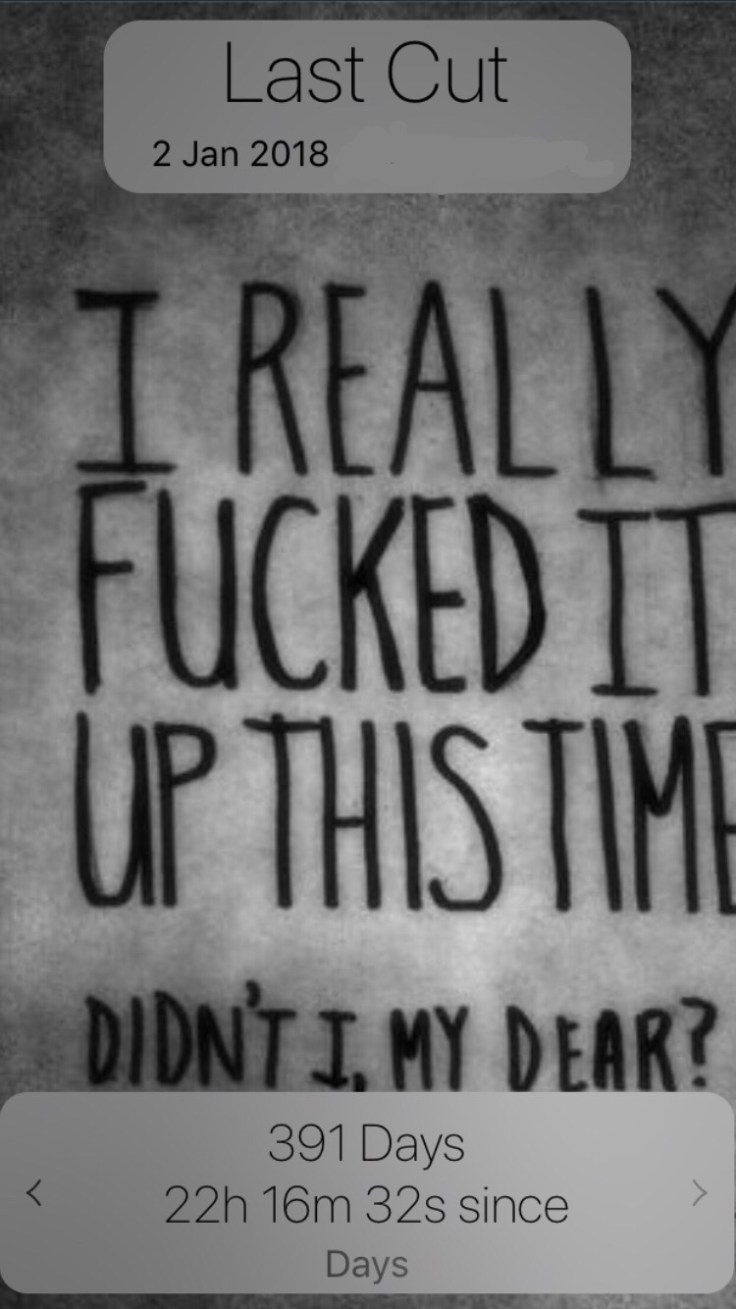
A countdown for the number of days I’ve been self harm free

I was trying to explain to someone recently the conflicting feelings that come into my head around self-harm. I want to self-harm, but really, I don’t. I keep thinking how much better it was to have an outlet for the way I feel, but really, I know that it wouldn’t help, it didn’t help, not really, not properly. But that doesn’t stop my mind jumping to it when I’m stressed, anxious or overwhelmed.

I haven’t self-harmed in 391 days, but I self-harmed from the age of 17 to 32 and intermittently before that. It’s not that I want to self-harm, it’s just that I want to breathe and not feel like I’m suffocating. I want to stop feeling like I’m dragging a weight around with me or wading through custard, and when it’s been something I’ve done for so long, it’s an immediate thought, an ingrained reaction that my mind jumps to when I feel bad.

I’m not naive, I know that just because I haven’t self-harmed in a long time, it doesn’t mean I won’t ever do it again. I can’t say for sure that I know I’ll never self-harm again, and even now, it’s not that I never do anything unhealthy/ potentially harmful or things that could be seen as negative ways of managing things, they’re just less destructive and don’t involve me ending up in A&E. The longer time goes on the bigger the stakes, once I was past 6 months I’d beat my previous longest time, then it was 7 months, 9 months and finally a year.

Sometimes people ask what they can do to help or make things easier, but I don’t always want them to do anything other than listen or try to see things from my position. I know some people are more practical than others, and their reaction is to look for a solution, but sometimes the solution is just to please listen to me and hear what I’m saying when I say how overwhelmed and stressed I feel. That I miss people I was close to, how alone I feel, how the light at the end of the tunnel feels very dim and distant right now, that’s what can be done to help.

Sometimes I just want someone to take me down to the car park and let me cry

Part of the problem?

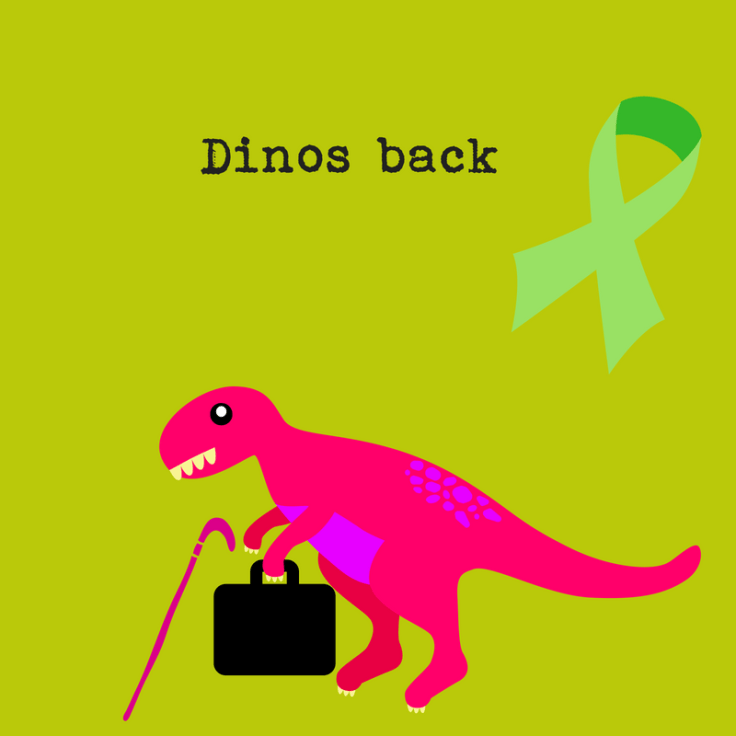
Dinos back
A green background with a pink dinosaur cartoon carrying a black briefcase and a pink walking stick. The words dinos back are at the top in black

Guess who’s back? Back again, dinos back, please like and share.

So it’s been a while, I’ve had to do lots of writing for work recently, which hasn’t left me with much brain capacity to write for enjoyment, but I’m back and return with a rant.

This week is Mental Health Awareness Week, and the theme is stress, which is ironic as stress and work are the reasons I haven’t blogged recently. It often feels like a week can’t go by without there being some kind of awareness day/ week/ month. So far this year, we’ve had time to talk day, self-injury awareness day, university mental health day, eating disorders awareness week and no doubt many others.

This month is borderline personality disorder awareness month. Normally, I’d write something about these or use them as a springboard to write about a related subject, but this time I’m writing about other people’s way of promoting these awareness days.

I know that I often use these awareness days and campaigns to promote my blog, and that’s not what I have an issue with, but people using it to promote their illness or compete over who is the sickest, especially on social media.

Mental health problems and chronic illness already have so much stigma attached, and there are so many misconceptions around them. The biggest areas of stigma I’ve found are within the medical system, from doctors and medical staff. I’ve had several occasions where I’ve been poorly treated and discriminated against due to my mental health, and especially self-harm. So why, when there is already stigma attached, do people within the mental health and chronic illness “communities” claim to be “raising awareness” by glorifying their illness or posting things that just add to the misconceptions?

Posting pictures of your self-harm as part of an awareness day isn’t going to reduce stigma, posting pictures of your face scratched up or countless pictures of your starved body is shocking and attention grabbing but ultimately adds to the idea that self harm is purely graphic and bloody, that personality disorders are all about self harm or that eating disorders are about being thin and fragile.

Mental illness is complex, and it’s often not pretty. We don’t need more images of fragile, delicate white girls or bloody and bruised bodies in the name of raising awareness. If I had £1 for every time a health professional made a throwaway comment about people with personality disorders or treated someone’s self-harm in an unprofessional or even cruel way, I would be a wealthy Dino.

We need to change how we raise awareness and avoid glorifying mental health problems as a way to show the reality of living with mental health issues, because the reality isn’t just what’s visible, and just showing that side of things not only gives a very narrow view but also undermines people who don’t experience mental illness this way.

It’s a broad spectrum, and everyone is different. We all have different experiences; everyone has different symptoms and lifestyles. Mental illness is invisible. Not everyone has scars (at least not physical ones), and that should be the message we send: mental health problems aren’t uncommon, they’re increasing, and you can’t always tell just by looking at someone.

Body and mind

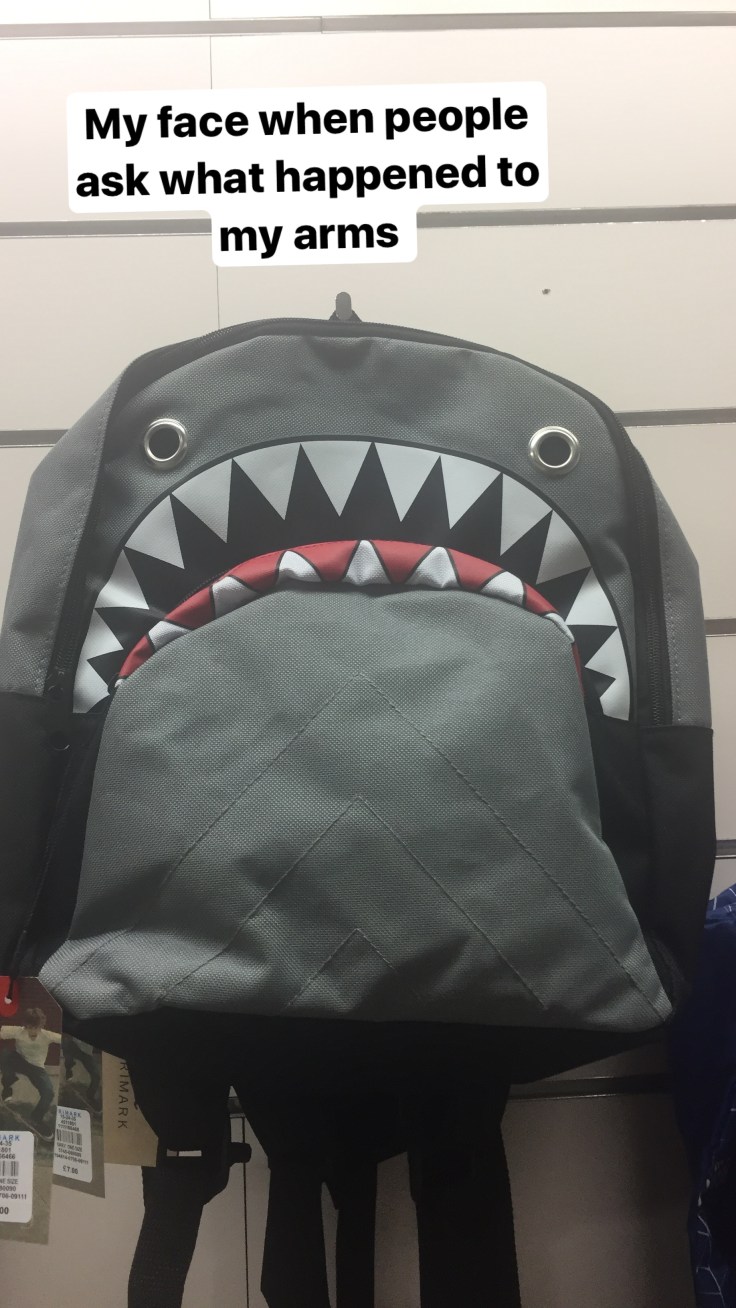
Shark bag
A picture of a shark rucksack looking anxious wih the caption “my face when people ask what happened to my arms”

*For the purpose of this post, I’ll be using the word disabled to mean people with a physical impairment. I do consider mental health problems to be a disability, but for clarity, I’ll refer to mental health separately.

So my brain whirred into action last night, thanks to an Instagram post by the amazing feeding of the fox. There’s a type of self-harm that’s rarely mentioned; self-neglect comes up in the context of depression.

I’ve never seen a discussion around the connection between disability or chronic illness and self-harm or disabled people deliberately not taking care of their physical needs as a way of self-harming. There are times when I say yes when I should say no, times when I will push myself because I don’t feel I deserve to rest. And times when I don’t take painkillers because it’s an indirect way of inflicting pain on myself, or going to places that aren’t accessible and doing things when I’m not well enough.

Any disabled person will also tell you there is a big divide in the treatment of physical and mental health problems, the two rarely mix, and the mental health services are not always good at recognising the impact that physical disability or chronic illness can have on mental health.

They don’t understand that the things that could benefit you mentally aren’t always possible physically (like going for a walk or having a bath). Being told I should do more exercise after I’ve explained that I have chronic pain and chronic fatigue can result in me feeling lazy and making myself do things that result in pain or injury and an increase in fatigue and related symptoms.

This is where the lack of understanding or knowledge of the connections between mental health and physical impairments is such a problem. For me, it can be an increase in symptoms, but for others, it can be much worse.

Then there’s the other side. Health services that treat your body as if your mind isn’t a part of it. Although I’ve always been disabled to some extent, in the last couple of years, my mobility has got worse, and I’ve been using mobility aids and dealing with more pain and fatigue.

At the beginning of 2017, I tried to access psychological therapy for long-term health problems. I wanted help accepting my chronic illness and dealing with no longer being able to do the things I used to and things people my age can do. I wanted some support in balancing my physical and mental health.

It took several months for them to tell me that they don’t offer support for chronic pain, between that they rejected me because I was under mental health services (I was in the process of being discharged and they were completely different services), they then said my self-harm made me too much of a risk and they said they didn’t think I’d be able to manage classroom based psychoeducation (thanks for that).

Last time I checked, neither my body nor my brain can function without the other, yet services treating each are still very separate and mental health services are often not accommodating for people with physical impairments. They often aren’t accessible, and there’s also an assumption that if you’re disabled and have mental health problems, then of course you’re depressed because you’re disabled, because who wouldn’t be?

Ableism, unfortunately, is still well-rooted within the medical profession and even within the disability communities, there is still too much separation of physical impairment and mental health issues.

Dear Dr (a message to Healthcare professionals treating self harmers in hospital)

I’m a regular at my local, which probably doesn’t sound unusual or uncommon, except that I don’t mean my local pub; I mean my local A&E department. Like around 1 in 4 people in the U.K. I have mental health problems and often require medical attention for self-harm. I decided to write a post about my experiences in A&E as an open letter to medical professionals.

Dear Dr or health care professional

The NHS is underfunded and over stretched, you work long hours in challenging conditions, often with little thanks or support; it’s impossible to be oblivious to the current state of our health care system. When you’re juggling patients and trying to be in 3 places at once it’s not hard to understand why you might not want to spend an hour or more treating someone for self inflicted injuries especially when you’re coming to the end of a long shift; however you chose a career helping people and taking care of their medical needs and I am a person in need of medical attention.

If you’ve never experienced a mental health problem or felt a need to harm yourself, then I don’t expect you to understand how I feel or why I do what I do, but the way I got my injuries doesn’t change the way they should be treated. I’ve been treated in ways I can’t imagine people who are there after an accident would be.

I’ve had wounds washed out in a sink in front of all the other cubicles and taken from one part of the department to another with nothing covering my arm while people stare at me, often horrified. On one occasion, my arm was covered so it wouldn’t scare the children in the paediatric A&E.

I’ve been stapled with no local anaesthetic and told it’s fine because it doesn’t hurt (it does), I know this is in partly due to guidelines but I’ve also had malicious treatment where one doctor repeatedly pulled the staples out and re did them all the while telling me if I didn’t stop I’d lose my arm while I sat in bed crying. I’ve had doctors tell me to think about how long it took them to treat me compared to the time it took me to hurt myself, and when I’ve felt faint from blood loss and said I need to sit down, I’ve been told I can wait a couple of minutes.

In my A&E notes, it says most of the time that I’m not distressed or that I was making eye contact; apparently, that means I’m fine. My mental state is frequently judged as fine because I’m not shouting or being abusive or absconding; however, at times when I have been visibly upset, I’m ignored.

I know accident and emergency staff are there to treat my physical injuries and leave the psychological side of things to the psych liaison but please remember that attached to the arm you’re treating is a person, I know my cuts can be deep and you may need another opinion but I’m not an exhibition for everyone to come and have a good look and discuss the damaged I’ve done, I see the signs that talk about dignity privacy and respect yet that doesn’t seem to apply if you’re a mental health patient; a little discretion wouldn’t hurt.

This isn’t intended as a criticism of the NHS; I know I’d be dead without it, but I didn’t choose to be this way; it’s something I’ve not been able to break away from despite treatment, and no amount of snapping elastic bands or holding ice cubes has ever replaced it as a coping mechanism.

Website Powered by WordPress.com.

Up ↑