‘Freedom day’

Four face masks with cartoon animals on them
Four masks from Sugar and Sloth

Tomorrow is ‘Freedom Day’ when the final lockdown restrictions are lifted. What freedom people are currently lacking is unclear, but some things I’ve seen are – having to wear a mask, having to check in at shops and restaurants, and not being able to meet as many people as they like. Apparently, this is oppression, and we can’t keep wearing masks forever because it’s not normal.

After the first date for ‘Freedom Day’ was delayed, anti-lockdown and anti-mask (or pro-death) protesters marched through London demanding everything be opened up again. They walked past open pubs, open cafes and restaurants with indoor dining and into an open shopping centre, which then had to close because of the disruption they caused (I bet Alanis Morissette didn’t see that one coming).

Cases are rising rapidly despite vaccines. Younger people are contracting the virus; there’s another mutation that has been allowed to spread rapidly, and again, we’re told that more people will die.

Freedom for disabled and chronically ill people looks quite different. The Office for National Statistics says that 2.2 million clinically extremely vulnerable (CEV) people were advised to shield. This meant not leaving the house at all unless absolutely necessary. Many relied on government food boxes or support from local charities and mutual aid groups that sprang up during lockdown.

People who are CEV, especially those who are immunocompromised, are getting told to shield again. Some people haven’t been out since the start of 2020, and the vaccine may not even work for immunocompromised people or those taking immunosuppressants. Since the start of the pandemic, there’s been this message that it only affects the elderly and vulnerable. Aside from this not being true, these people are not disposable because they’re older or disabled, but they’ve been thrown under a bus and allowed to die to give other people their ‘freedom’.

The other used phrase (apart from wake up sheeple which makes me want to stab someone in the eye) is if you’re scared, stay at home and let people who want to live go out. People who are shielding don’t want to have to stay in or avoid contact with their partners. They don’t want to go a year without seeing anyone or not getting the medical or social support they need, and they shouldn’t have to stay in forever because others are too selfish to wear a mask or make any other minor sacrifices.

July is disability pride month, and once again, disabled people are being left to die or excluded from society, this time to please the people who are tired of the pandemic. We have to learn to live with the virus, let the bodies pile up on the street and pretend to care with gesture politics like clapping, because making sure people can go to the football and trade deals with India are more important than saving lives.


10 things not to do to disabled people

It’s disability pride month, and I’ve written a list of things not to do to disabled people.

1. Don’t guilt-trip disabled people for not being ethical enough. We know Bezos is awful, we know Amazon treats their staff like crap, we know all the issues with fast fashion and ‘Unnecessary’ plastic packaging on fruit and veg. Shops often aren’t accessible, and many of us don’t have the energy to trawl through charity shops and second-hand shops.

The pandemic made people even more reliant on places like Amazon, especially those who were shielding. Plastic straws have such a negligible impact on climate change and single-use plastic, and that ‘Unnecessary’ plastic on fruit and veg may be the only way someone can eat it (trust me, we don’t like paying more because we can’t cut up a mango).

2. Do not touch someone’s mobility aids. They’re an extension of our bodies, our freedom to access the world. Grabbing someone’s wheelchair could cause pain and injury or damage it (do you know how much those cost?), moving someone’s mobility aid to somewhere more convenient might take away their ability to move from where they’re sitting, if something is in your way ask (nicely) if we’re able to move it, we don’t bite (often).

3. Don’t touch or distract a service dog; they’re working, and distraction puts the handler at risk.

4. This should be obvious – don’t report them for benefits fraud because they walked or you think they’re faking it when they’re having a good day. Despite what the Daily Mail says, benefit fraud is not the massive problem they try to say it is. Don’t make comments like ‘It’s a miracle’ if a wheelchair user stands or walks; not everyone is paralysed or unable to walk at all.

5. Following on from 4…..don’t complain about accommodations made for disabled people. Motability cars aren’t free; they’re rentals with the money being taken out of benefits. Yes, we can often get a carer in free to events, but that’s because we need help and assistance. You might have to wait for the next bus or move your buggy, but wheelchair users have a legal right to that space (I’m an ambulatory disabled person, and that’s the only space I can safely stand, if I can move, so can non disabled people).

6. Don’t make assumptions about our abilities if we say we can do something or we don’t need help. Don’t argue or do what you think we need.

7. Don’t assume somewhere is accessible because it has a lift or a ramp. Accessibility isn’t that simple. Ask what accommodations we need or if we want to look into it instead.

8. Don’t take photos or videos of us in public. I can’t believe I have to write this. Our appearances, behaviour, the way we interact with the world or the way we physically move may not be the same as everyone else, but news flash, we’re people too. Don’t do this (and if you do, please go suck a bag of dicks).

9. Don’t blame us for the lack of access affecting you. We can’t help the amount of time it takes for trains or buses to put out ramps; we also have places to get to.

10. Don’t take advantage of things that are in place to make life easier for disabled people. Don’t park in blue badge parking spaces if you don’t have a blue badge, even if you are only going to be a few minutes. Don’t use the accessible toilet to go for a poo or to take selfies. Priority seats are near the doors on a train or bus because we need them to be. Please don’t sit in them unless you need to.

These are just a few things and nowhere near an exhaustive list. Everyone’s circumstances are different, and not all disabilities are visible. My comments about not using an accessible toilet or priority seat are not aimed at people who aren’t visibly disabled.

Managing

I don’t have an issue with taking the easier option. I’m not going to take the harder way of doing something if an easier option is available. Why struggle to add something up if there’s a calculator available? Why carry a suitcase if it has wheels? Why use a tin opener if there’s a ring pull?

But when it comes to being disabled, I tend to manage before going for the easier option or the option involving using aids or adaptations, I’m more hesitant to do what’s easiest. Some of this is about other people’s perceptions or questions.

When I first started using mobility aids I was so anxious about what people would say because I was going from having an invisible disability to a visible one and suddenly people became aware of the accommodations I needed (not completely but more than they had) you can thank social anxiety for me not asking for accommodations before or even after I still prefer things like badges or lanyards to talk for me.

My partner recently moved, and his new flat has a bath with a shower attached, but there are no handles or grab rails; at home, my bath has handles and a grab rail, and that’s a struggle. I put grippy duck stickers in the bath. I told myself it was fine and I could manage, but then I caved and got a shower seat. Of course, I still questioned whether I needed it because I was managing without.

A white slatted shower stool in a white bathtub
The latest accessory

On Monday, I used my shower stool, and it really made things easier. I could spend longer in the shower, I used up less energy, was less anxious about falling over, and I was able to wash my legs and feet without the risk of falling.

Managing isn’t everything. I can manage to walk unaided, but it’s harder, causes more pain and fatigue, and I’m more likely to fall over. I could manage at cons and outdoor events without using my crutches, but it would be exhausting, my hips would hurt so much I wouldn’t be able to walk the next day, and I wouldn’t be able to manage without a lot more help than I already get, especially on wet or uneven ground.

Sometimes it’s not enough to just manage, and if there is a way to make things easier, don’t settle for managing.

You are creating all the bubbles at play

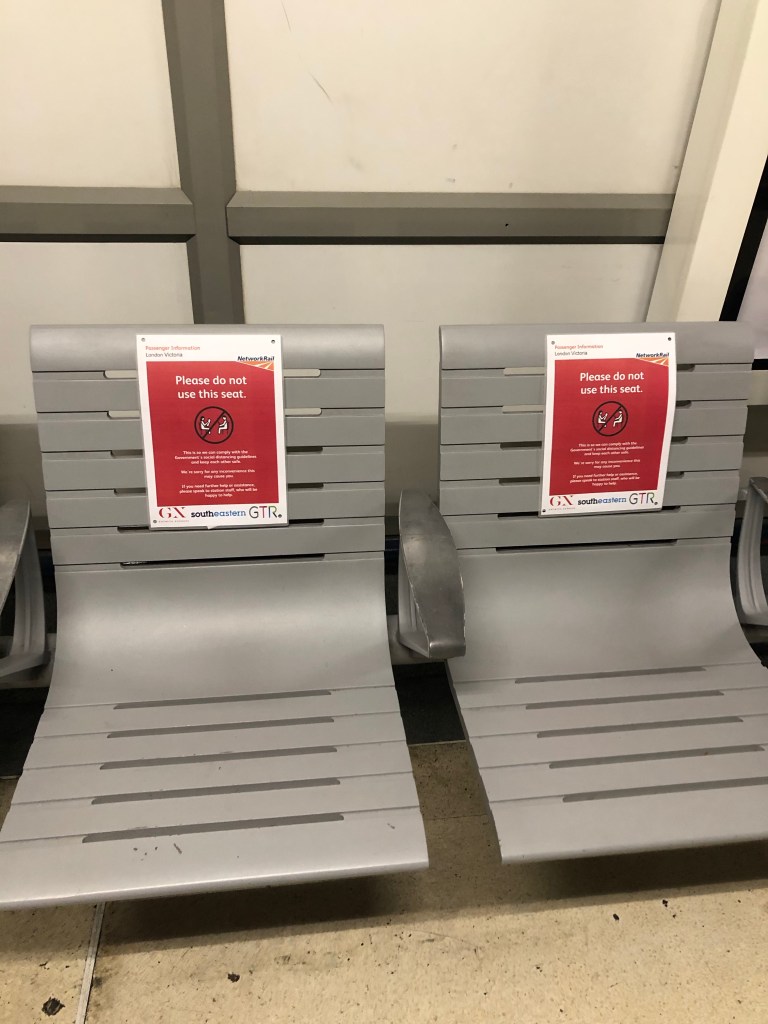
Two grey train station benches both with red signs warning people not to sit on them due to social distancing
Why are we waiting? Seats you can’t sit on

I’ve mostly avoided public transport and the public in general since March; however, in the last couple of weeks, I’ve made my first trip south and back and used trains again. I know I’ve blogged about the difficulties of using public transport as a disabled person before, but travelling during a global pandemic with social distancing measures makes it harder.

The current recommendations for distancing are two meters where possible or 1 meter+. Buses have blocked off some of the seats, benches have every other seat taped up, and all forms of transport are meant to limit how many people use them at a time. Face coverings are also mandatory.

The problem is that people who need to sit down, and especially those in need of a priority seat, are at a disadvantage. The majority of priority seats on buses are not in use, non disabled people sitting in the seats nearest the doors on the trains force disabled people to walk down the train or stand and a lack of benches at stations again forces standing or sitting on the floor, which is dirty and unpleasant, even when there aren’t increased health risks.

Despite wearing a hidden disabilities sunflower lanyard, a please offer me a seat and wrestling with a suitcase and mobility aids, people still seem oblivious to my existence (I don’t like asking in case someone is disabled).

A light green lanyard with small sunflowers printed on it
A sunflower lanyard from the hidden disability scheme

Masks are a struggle for some disabled people, too. They’re claustrophobic for people with anxiety, can be difficult for people with sensory issues and can make communication hard for people who lip-read.

There are many ways in which the pandemic is harder for disabled people than non disabled people, especially struggles around accessibility, and the easing of lockdown restrictions keeps bringing more challenges.

Sing little darling

Sing with me

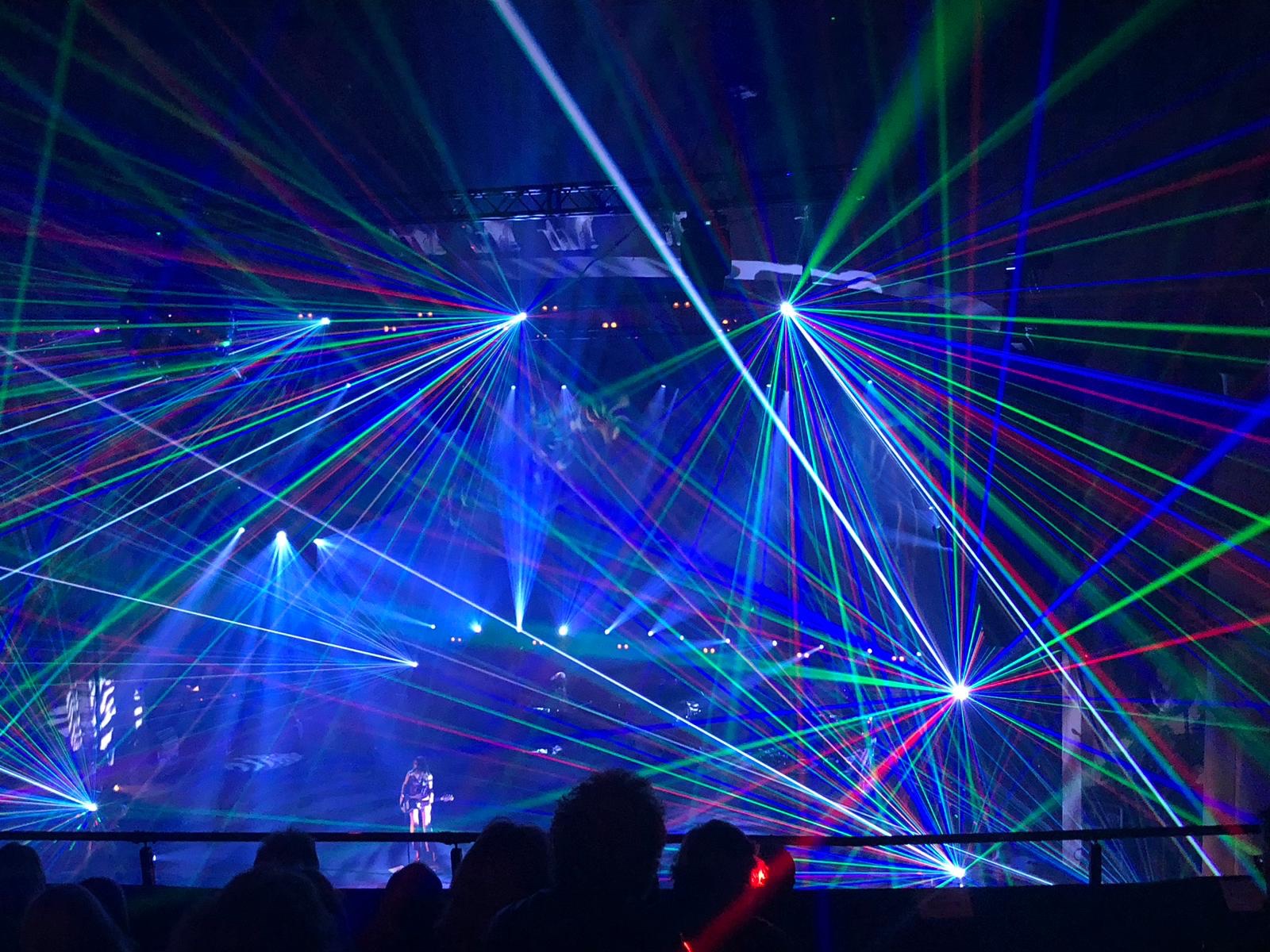
Blue, green, red and white laser beams pointing in all directions around s concert venue

I love live music. I love going to gigs, even though I don’t do it that often; it’s something I really enjoy. As a rather emo teenager, I’d queue up in the cold wearing just jeans and a t-shirt, arriving several hours early to guarantee a place at the front by the stage with only the bare minimum of possessions with me to avoid the need for a bag. I would far rather be crushed and sweaty in the mosh pit than sensibly seated or in the less crowded areas at the back.

My first and only festival experience was not something I’m keen to revisit. Between the lack of sleep, disrupted medication schedule, and discomfort of camping, day festivals and open-air gigs are more my thing with a comfortable bed to return to

The days of post-gig highs from adrenaline and lack of sleep have been replaced by planned annual leave the day after a night out to recover. I can’t stand for anywhere near the length of time a gig lasts, and the crowds bumping and pushing me not only increase my anxiety but also cause physical pain and rock my already shaky balance.

Today I’m paying for last night, although the pain and exhaustion are worth it for such a good time seeing First Aid Kit, a band that, although I haven’t been following for long, I’m now a big fan of and really love the music of. They’re also amazing live, but despite some of the perks of going to a gig as a disabled person, such as queue jumping or getting a carers ticket for free, I do wish I could still be near the front and not forced to be seated out of necessity.

Website Powered by WordPress.com.

Up ↑